
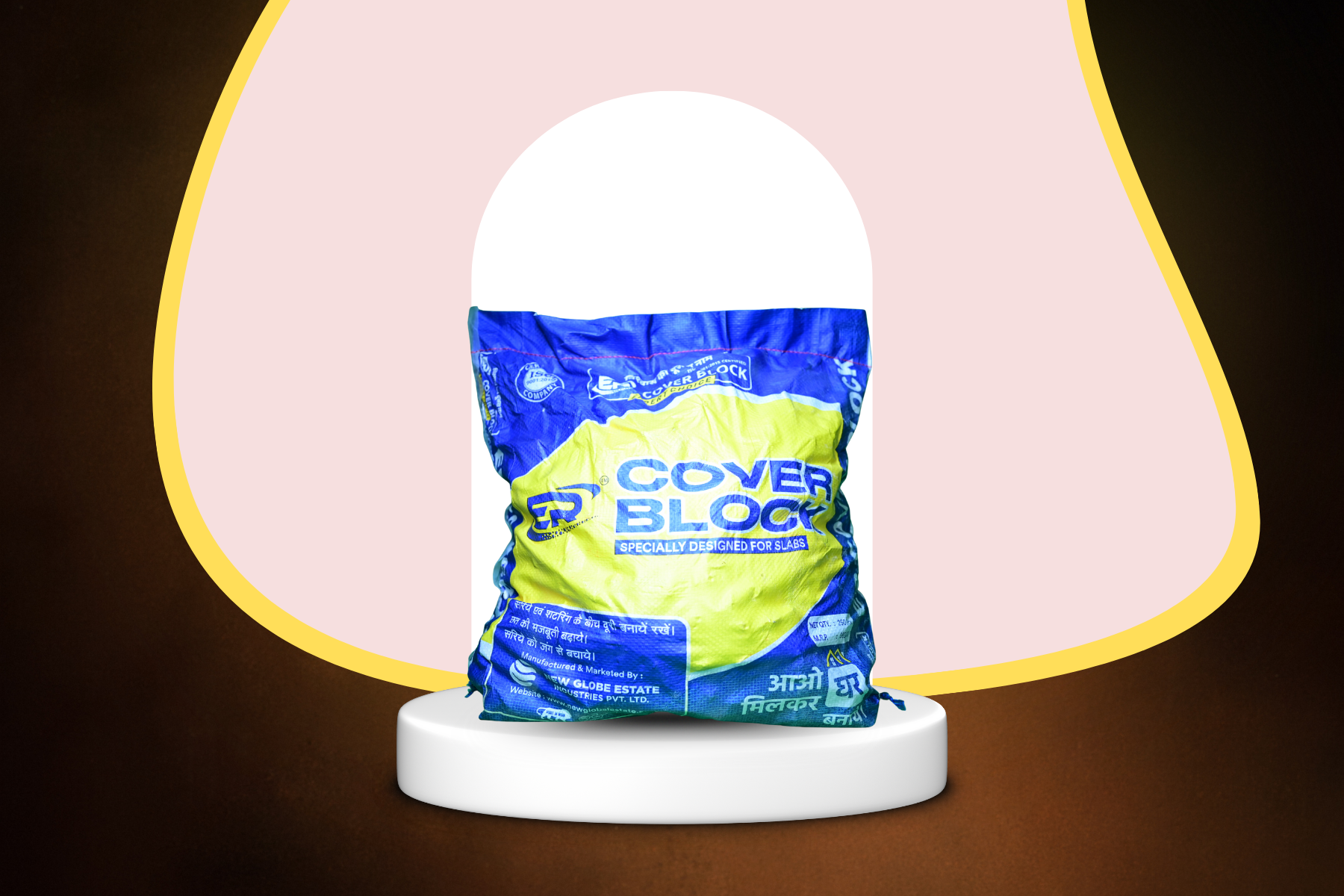
Navodya Group Pvt. Ltd. : ER. Cover Blocks are high-density, factory-cast concrete spacers designed to maintain precise reinforcement cover depth in RCC slabs, beams, columns, and foundations.
What are ER Cover Blocks and Why Are They Vital?
ER Cover Blocks are engineered concrete spacers cast with high-strength cement mortar and fiber reinforcement. Placed between the formwork and steel rebar before concrete casting, they guarantee that reinforcement bars maintain the exact distance mandated by engineering codes.
Maintaining accurate cover prevents steel reinforcement from being exposed to air and groundwater. By eliminating rebar exposure, ER Cover Blocks stop rust, concrete spalling, and premature structural failure, ensuring the building achieves its designed 50+ year structural life.
Installation Guidelines for Structural Concrete
Follow these civil engineering best practices for spacing and securing cover blocks on site.
- Size Selection: Choose cover block sizes matching your structural drawings (e.g., 20 mm for slabs, 25 mm for beams, 40 mm for columns, 50 mm for footings).
- Placement Spacing: Place cover blocks at regular 1.0-meter intervals along reinforcement bars to prevent rebar sagging under worker foot traffic.
- Tie Wire Binding: Secure each cover block to the reinforcement bar using embedded binding wire so they do not dislodge during concrete pouring.
- Formwork Inspection: Check that all cover blocks rest firmly against shuttering plates without gaps before beginning the pour.
- Vibration Care: Ensure needle vibrators do not directly strike the cover blocks during compaction.

Uniform Thermal Expansion
Because they are made from concrete, they have the exact same thermal expansion and bonding properties as the surrounding slab.

Superior to PVC Spacers
Unlike plastic spacers that create cold joints and leak paths, concrete cover blocks bond homogenously with the cast concrete.
Frequently Asked Questions About Cover Blocks
Concrete cover blocks share identical thermal expansion and compressive strength with the surrounding concrete, creating a monolithic bond without the micro-cracks and leak paths associated with plastic spacers.
As per IS 456 standards: Slabs typically require 15-20 mm cover, beams require 25 mm, columns require 40 mm, and ground foundations or footings require 50-75 mm.
ER Cover Blocks are manufactured using high-grade M30/M40 mortar with fiber reinforcement, ensuring they comfortably support worker foot traffic and heavy steel cages without crushing.
On average, 4 to 5 cover blocks per square meter are recommended to ensure reinforcement meshes remain perfectly rigid and level during the pour.
No. They are produced with low water-cement ratios and high compaction, giving them near-zero permeability and total corrosion protection for embedded rebar.